
What Is Pavement Milling and When Does a Road Need It?
Pavement milling removes worn or damaged asphalt to prepare roads and parking lots for resurfacing without raising their finished height. Learn how milling works, when it is needed, how deep it goes, and how it prepares pavement for a new asphalt overlay.
November 1, 2026
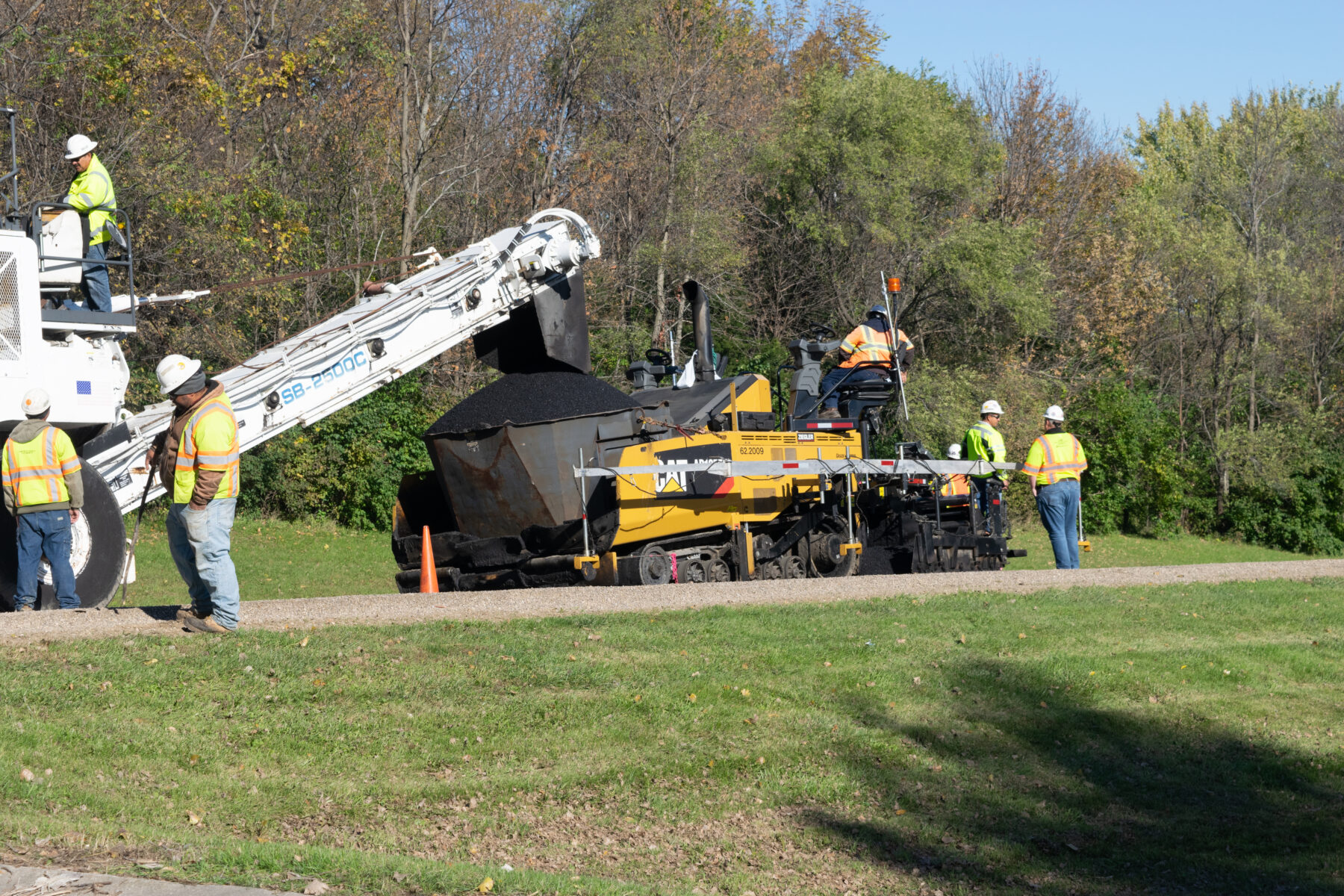
Pavement milling removes worn asphalt so a road or parking lot can take a new surface without changing the height of the pavement. It is a common first step in resurfacing because it clears away damaged material and makes room for an overlay to tie back in at curbs, drains, and entrances. Whether a road needs milling depends on how much of the damage is confined to the asphalt and whether the base below is still sound.
How Does Pavement Milling Work?
A pavement milling machine grinds away asphalt with a rotating steel drum lined with replaceable carbide teeth. As the machine moves forward, the drum cuts through the surface at a set depth, and a front conveyor carries the broken material, called millings, up into a dump truck traveling ahead of it. Automatic grade controls hold that depth to within a fraction of an inch across each pass, leaving a uniform, grooved surface behind.
The millings themselves go back to work. Asphalt milling turns the old surface into reclaimed material that can be screened and blended into new hot mix, so pavement coming off one road can become part of the next one. Water sprayed onto the drum during the cut keeps the teeth cool and holds down dust.
Which Surface Problems Call for Milling?
A road needs milling when its damage stays in the upper layers of asphalt, within reach of the drum, while the base underneath still carries traffic without sinking. Raveling, where loose stone washes out of a dry, oxidized surface, falls into that group. So do shallow ruts in the wheel paths and shoving, where the mix has pushed up into ridges at stop bars and turning lanes. Most rutting develops within the top four inches of a pavement, which keeps it inside the range a milling pass can remove.
Surface cracking is another common reason to mill. A network of cracks left under a new layer tends to work its way up through it, a pattern known as reflective cracking. Milling takes the cracked asphalt off within the depth of the cut, so the overlay starts on continuous, solid material.
Deeper distress calls for a different repair. Alligator cracking around soft, sinking spots, or cracks that pump water and fines under traffic, usually point to a base that has lost support. A fresh surface over that base would flex the same way, so those areas move to full-depth patching or a full replacement, with milling still used to clear the old asphalt first.
Milling Before an Overlay
On pavement with a sound base, milling before an overlay keeps the finished surface at the same height as everything built around it. A new surface course commonly adds about one and a half to two inches of asphalt. Paved directly over the old surface, that added thickness shortens the curb face, sets the pavement above gutter lines and drain grates, and leaves a raised lip at driveway aprons and building entrances. Removing a matching depth first lets the new layer tie in level with those edges.
Drainage depends on that same depth control. A milling machine can cut deeper along one side of a lane than the other, restoring a crown or cross slope that sends runoff toward the gutter instead of letting it pond. The grooved texture left behind also gives the tack coat and new asphalt more surface to grip, which tightens the bond between the two layers.
How Deep Does Pavement Milling Go?
Pavement milling for a standard resurfacing job usually runs one to two inches deep, roughly matching the overlay that goes back down in its place. The exact depth follows how far the surface damage reaches and how much curb height the site has to spare.
Cores drilled before the job show how thick each existing layer is. That measurement matters because a cut stopping just above the seam between two older layers can leave a thin sliver of asphalt behind, and that sliver can peel loose under traffic once the overlay goes on. Setting the drum slightly deeper or shallower puts the cut onto solid material instead.
Milling can also run much deeper when a section is headed for reconstruction. In that case the drum can take the asphalt all the way down to the base, clearing the area for new base material and a fresh pavement section.
What Happens After Pavement Milling?
Once pavement milling reaches the target depth, the surface gets swept clean before any new asphalt goes down. Power brooms and sweepers pull dust and loose fines out of the grooves, since debris left in place sits between the old and new layers and weakens their bond. A thin tack coat of asphalt emulsion then goes across the milled surface so the overlay adheres to it.
New asphalt follows close behind the milling crew. Hot mix asphalt is placed over the tacked surface and rolled to density, filling the grooves and seating against the textured asphalt below. Keeping that gap short matters on a road that stays open to traffic, since an exposed milled surface holds water in its grooves and rides rougher until the new layer covers it.
Milling can extend the life of a road or parking lot when the damage is limited to the asphalt surface. The key is determining how much pavement needs to be removed and whether the underlying structure can support a new overlay. Des Moines Asphalt and Paving provides milling, patching, grading, and paving services to address those needs. Request a quote to discuss an upcoming resurfacing project.